2026-10-26
How to read shadow length to confirm roof collapse in satellite imagery
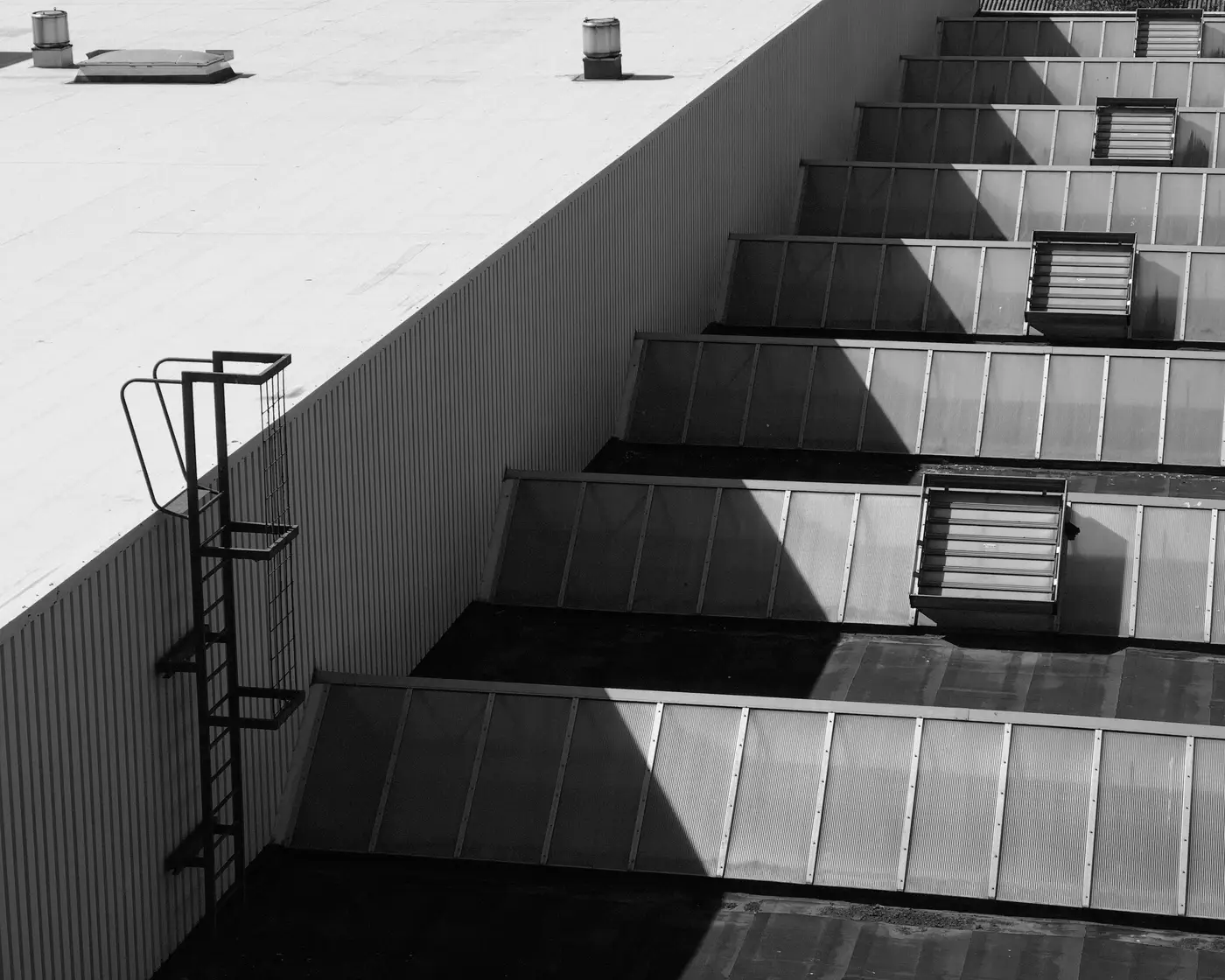
When you get a pre-strike and post-strike VHR pair for the same structure, roof collapse isn't always obvious just from looking at the roofline. A roof that's punched through but still mostly holding its shape can look close to identical from near-nadir to one that's pancaked flat, especially on a sloped or metal roof where rubble texture doesn't resolve cleanly at 0.5 m GSD. Shadow length is the measurement that gives you the dimension a straight overhead pixel count can't.
Why shadow length matters more than the roof outline
The shadow a structure throws changes with the height of whatever's still standing above grade. A building that's lost an upper floor casts a shorter shadow than its own pre-strike footprint would suggest, roughly proportional to how much height came off. That's true even when the roof surface itself, viewed from directly overhead, hasn't changed enough to call collapse with confidence. The shadow is reading height. The roof outline is reading area. They're not the same evidence.
Working the measurement
Start with the sun geometry for each acquisition, pulled from the image metadata rather than estimated by eye. Pre-strike and post-strike passes are rarely at the same sun azimuth and elevation unless the tasking happened to land a near-anniversary repeat, so treat them as two separate calculations, not one before/after subtraction.
Pick a fixed reference point on the structure, a corner or a distinct roof feature works best, and measure shadow length from that point along the sun's azimuth in both frames. Convert each measurement using height equals shadow length multiplied by the tangent of the sun elevation angle. The collapsed height is the difference between the two converted heights, not the raw difference in shadow length on the ground, because a shift in elevation angle between passes will throw off a straight pixel comparison.
A wall still standing at its original height but a roof that's gone often shows a shadow you don't expect at first glance: a step in the shadow edge, or a shadow that now falls partway across the building's own footprint instead of clearing it, because there's no roofline overhang left to throw it clear.
What the shadow confirms, and what it doesn't
A shortened or altered shadow confirms a loss of height somewhere on the structure. Settling whether that loss is a full roof collapse, a parapet knocked off, an upper floor pancaked, or rooftop equipment sheared away takes the rest of the frame: visible rubble through a breach, a shifted roofline edge, a debris apron spreading from the footprint. Weigh the shadow measurement alongside those signals rather than reading it on its own.
Flat roofs are the hard case. A flat roof with no parapet throws almost no distinguishing shadow near local noon, regardless of what happened underneath, so a strike assessed close to high sun on a flat-roofed facility needs a different line of evidence, an oblique collection or a pass at a lower sun angle, because the shadow method has nothing to grab onto at that geometry.
Check the rubble pile itself too, not just the structure outline. A debris pile a couple meters high casts its own shadow, and at 0.5 m GSD that shadow is sometimes the clearest single confirmation on the frame that something fell, even when the roof itself reads ambiguous.
Off-nadir collection angle matters as much as sun angle before you commit to a grade. A structure imaged well off-nadir has a foreshortened footprint, so a fixed-point shadow measurement needs the collection geometry factored in alongside the sun metadata, or it reads short or long for the wrong reason.
None of this replaces a dated, structure-by-structure record that goes to the re-strike board with the before and after frame side by side and a grade written against each building on the list. Battle Damage Assessment turns the before/after VHR pair into that itemized sheet as soon as a strike tasking comes back, so the shadow call sits next to the rest of the collapse signature instead of staying in an analyst's working notes.
If a strike needs grading this week, run it through Battle Damage Assessment before the re-strike decision gets made without it.